 Image 1 of 1
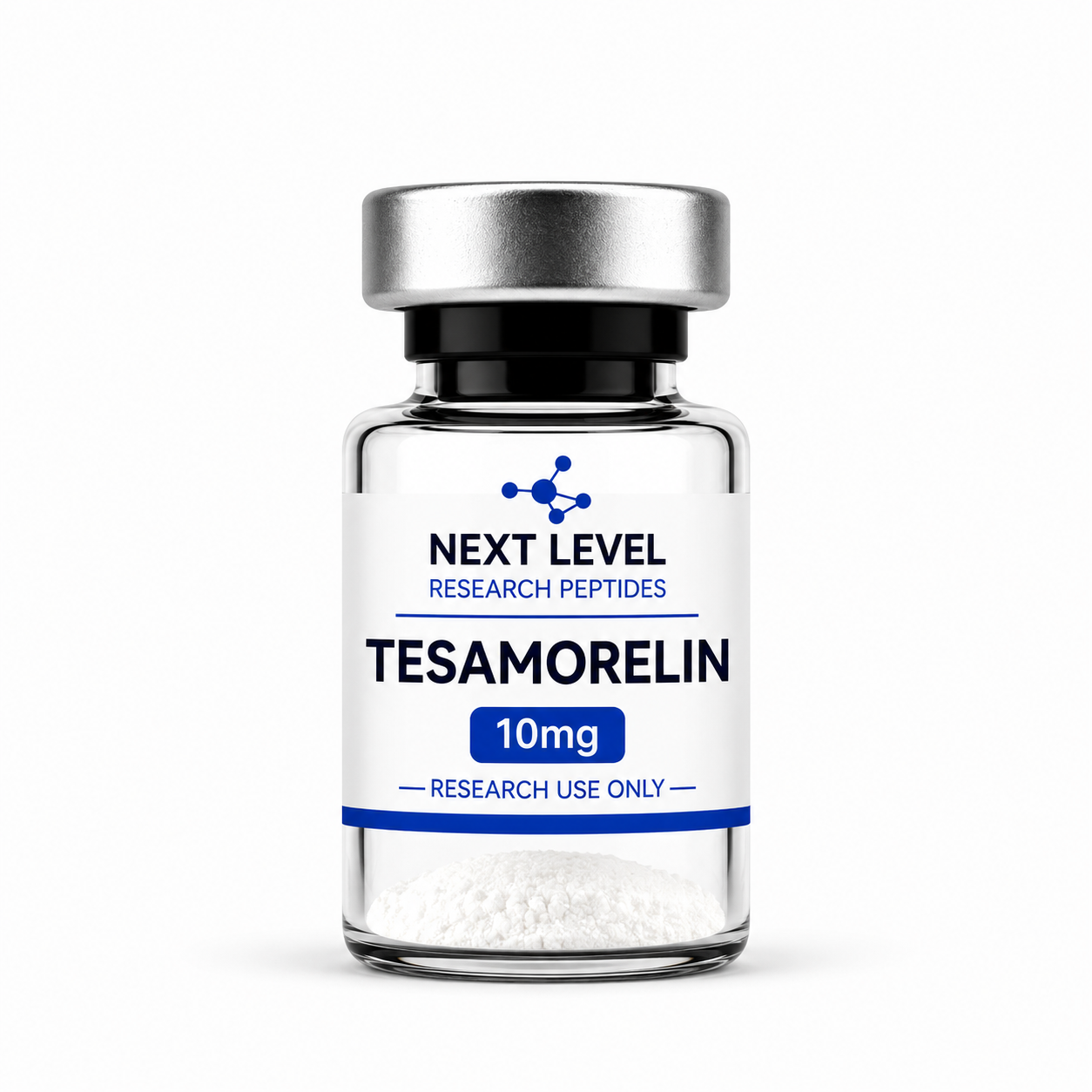
Tesamorelin is a synthetic analogue of Growth Hormone Releasing Hormone (GHRH) that stimulates the body's natural production of growth hormone. It is being investigated for its effects on growth hormone secretion, insulin like growth factor 1 (IGF 1) production, body composition and metabolic health.
Researchers are exploring its potential role in regulating visceral fat, supporting metabolic function and understanding the physiological effects of growth hormone signalling.
Research
Tesamorelin has been extensively evaluated in human clinical trials, where research has demonstrated its ability to increase endogenous growth hormone and IGF 1 levels while reducing visceral adipose tissue in specific patient populations.
It has also been investigated for its effects on liver health, body composition and metabolic function, with ongoing studies exploring potential applications in conditions associated with metabolic dysfunction, including metabolic dysfunction associated steatotic liver disease (MASLD). Research continues to expand understanding of its biological mechanisms and broader metabolic effects.
Bacteriostatic water is included.
Tesamorelin is a synthetic analogue of Growth Hormone Releasing Hormone (GHRH) that stimulates the body's natural production of growth hormone. It is being investigated for its effects on growth hormone secretion, insulin like growth factor 1 (IGF 1) production, body composition and metabolic health.
Researchers are exploring its potential role in regulating visceral fat, supporting metabolic function and understanding the physiological effects of growth hormone signalling.
Research
Tesamorelin has been extensively evaluated in human clinical trials, where research has demonstrated its ability to increase endogenous growth hormone and IGF 1 levels while reducing visceral adipose tissue in specific patient populations.
It has also been investigated for its effects on liver health, body composition and metabolic function, with ongoing studies exploring potential applications in conditions associated with metabolic dysfunction, including metabolic dysfunction associated steatotic liver disease (MASLD). Research continues to expand understanding of its biological mechanisms and broader metabolic effects.
Bacteriostatic water is included.