 Image 1 of 1
NOT FOR HUMAN CONSUMPTION - NOT FDA APPROVED
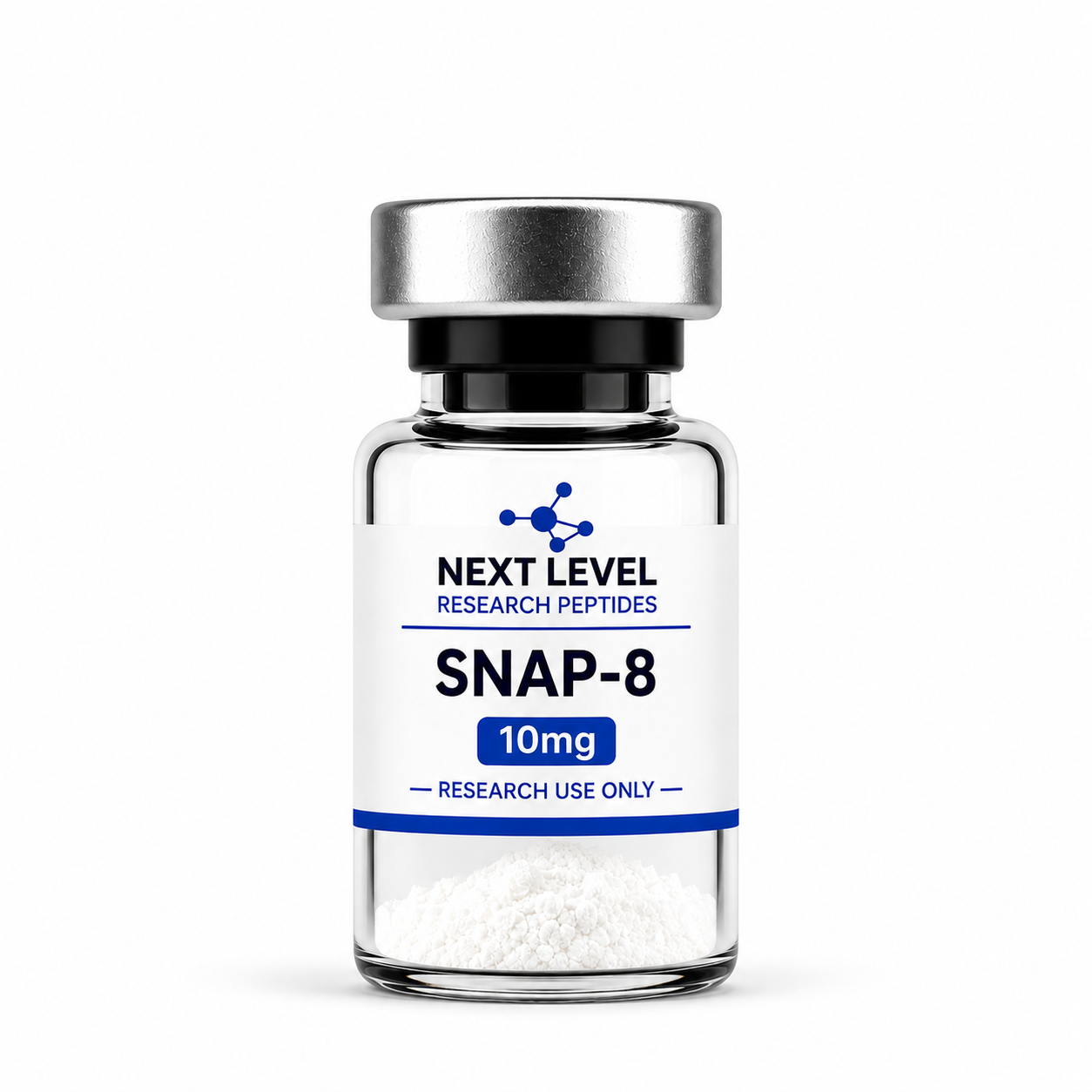
SNAP 8 is a synthetic octapeptide derived from the N terminal end of SNAP 25, a protein involved in the release of neurotransmitters. It is being investigated for its potential to influence muscle contraction signalling pathways associated with the formation of dynamic facial lines and wrinkles.
As a result, SNAP 8 has become a focus of research into skin ageing and cosmetic science, with studies exploring its role in supporting a smoother skin appearance.
Research
SNAP 8 has been investigated in laboratory studies and cosmetic research examining its effects on the biological mechanisms involved in facial muscle contraction. Research suggests it may reduce the release of neurotransmitters responsible for repetitive muscle movements, which are associated with the development of expression lines.
Early cosmetic studies have reported improvements in the appearance of fine lines and wrinkles, although larger independent clinical studies are needed to further evaluate its long term efficacy and broader applications.
Ongoing research continues to explore its role in skin biology and anti ageing science.
This is for topical application only.
NOT FOR HUMAN CONSUMPTION - NOT FDA APPROVED
SNAP 8 is a synthetic octapeptide derived from the N terminal end of SNAP 25, a protein involved in the release of neurotransmitters. It is being investigated for its potential to influence muscle contraction signalling pathways associated with the formation of dynamic facial lines and wrinkles.
As a result, SNAP 8 has become a focus of research into skin ageing and cosmetic science, with studies exploring its role in supporting a smoother skin appearance.
Research
SNAP 8 has been investigated in laboratory studies and cosmetic research examining its effects on the biological mechanisms involved in facial muscle contraction. Research suggests it may reduce the release of neurotransmitters responsible for repetitive muscle movements, which are associated with the development of expression lines.
Early cosmetic studies have reported improvements in the appearance of fine lines and wrinkles, although larger independent clinical studies are needed to further evaluate its long term efficacy and broader applications.
Ongoing research continues to explore its role in skin biology and anti ageing science.
This is for topical application only.