 Image 1 of 1
NOT FOR HUMAN CONSUMPTION - NOT FDA APPROVED
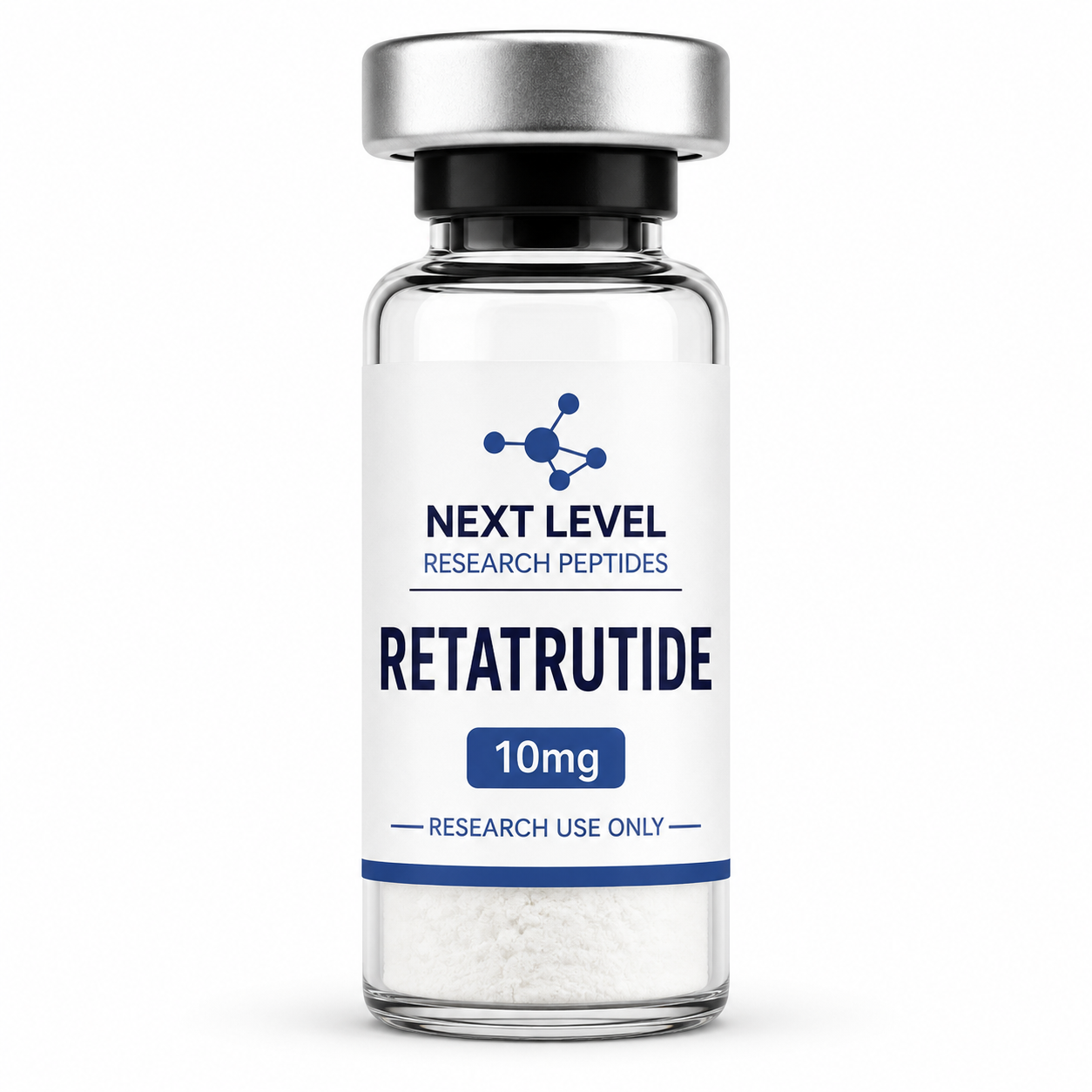
Retatrutide is a synthetic peptide that acts as a triple agonist of the glucagon like peptide 1 (GLP 1), glucose dependent insulinotropic polypeptide (GIP) and glucagon receptors.
It is being investigated for its potential to influence appetite regulation, energy expenditure, glucose metabolism and fat utilisation.
By targeting three complementary metabolic pathways, Retatrutide has become a significant area of research in obesity, metabolic health and weight management.
Research
Retatrutide is currently being evaluated in large scale human clinical trials, with early research demonstrating substantial reductions in body weight alongside improvements in glycaemic control and cardiometabolic markers in adults with obesity or overweight.
Researchers are also investigating its potential role in conditions associated with metabolic dysfunction, including cardiovascular disease, metabolic dysfunction associated steatotic liver disease (MASLD) and obstructive sleep apnoea. While the findings to date are promising, research is ongoing to further establish its long term safety, efficacy and potential applications.
Bacteriostatic water is included.
NOT FOR HUMAN CONSUMPTION - NOT FDA APPROVED
Retatrutide is a synthetic peptide that acts as a triple agonist of the glucagon like peptide 1 (GLP 1), glucose dependent insulinotropic polypeptide (GIP) and glucagon receptors.
It is being investigated for its potential to influence appetite regulation, energy expenditure, glucose metabolism and fat utilisation.
By targeting three complementary metabolic pathways, Retatrutide has become a significant area of research in obesity, metabolic health and weight management.
Research
Retatrutide is currently being evaluated in large scale human clinical trials, with early research demonstrating substantial reductions in body weight alongside improvements in glycaemic control and cardiometabolic markers in adults with obesity or overweight.
Researchers are also investigating its potential role in conditions associated with metabolic dysfunction, including cardiovascular disease, metabolic dysfunction associated steatotic liver disease (MASLD) and obstructive sleep apnoea. While the findings to date are promising, research is ongoing to further establish its long term safety, efficacy and potential applications.
Bacteriostatic water is included.