 Image 1 of 1
NOT FOR HUMAN CONSUMPTION - NOT FDA APPROVED
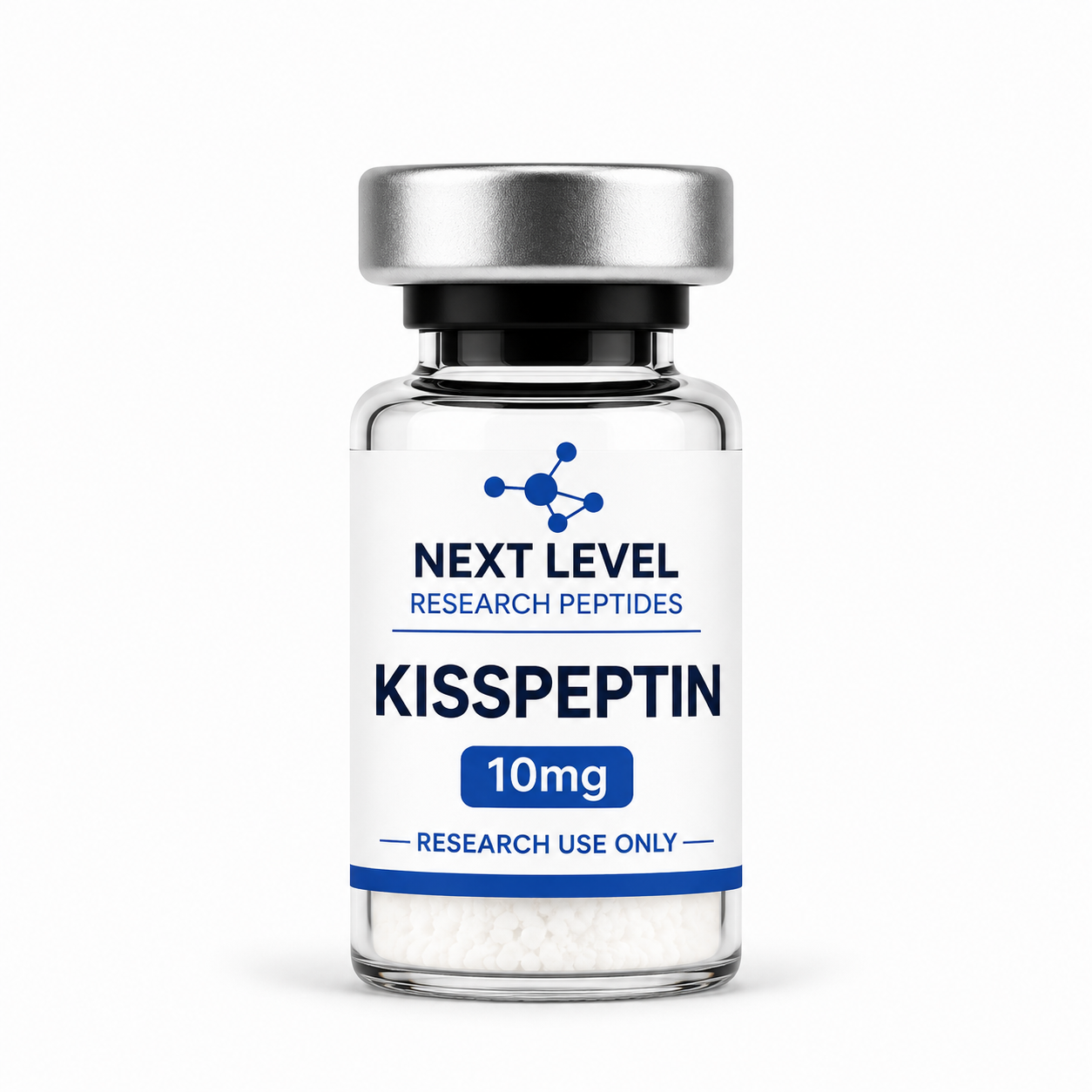
Kisspeptin is a naturally occurring peptide that plays a central role in regulating the reproductive hormone axis. It acts on the hypothalamus to stimulate the release of gonadotropin releasing hormone (GnRH), which in turn promotes the secretion of luteinising hormone (LH) and follicle stimulating hormone (FSH).
Researchers are investigating Kisspeptin for its influence on reproductive function, fertility, puberty, hormonal regulation and aspects of sexual health.
Research
Kisspeptin is one of the most extensively studied peptides involved in reproductive endocrinology, with numerous human clinical studies demonstrating its ability to stimulate the release of reproductive hormones in both men and women.
Research has explored its potential applications in fertility treatment, hypothalamic reproductive disorders and assisted reproductive technologies, while ongoing studies continue to investigate its wider role in metabolic regulation, pregnancy and reproductive health.
Although the biological mechanisms are well established, research into additional therapeutic applications remains ongoing.
Acetic Water is included
NOT FOR HUMAN CONSUMPTION - NOT FDA APPROVED
Kisspeptin is a naturally occurring peptide that plays a central role in regulating the reproductive hormone axis. It acts on the hypothalamus to stimulate the release of gonadotropin releasing hormone (GnRH), which in turn promotes the secretion of luteinising hormone (LH) and follicle stimulating hormone (FSH).
Researchers are investigating Kisspeptin for its influence on reproductive function, fertility, puberty, hormonal regulation and aspects of sexual health.
Research
Kisspeptin is one of the most extensively studied peptides involved in reproductive endocrinology, with numerous human clinical studies demonstrating its ability to stimulate the release of reproductive hormones in both men and women.
Research has explored its potential applications in fertility treatment, hypothalamic reproductive disorders and assisted reproductive technologies, while ongoing studies continue to investigate its wider role in metabolic regulation, pregnancy and reproductive health.
Although the biological mechanisms are well established, research into additional therapeutic applications remains ongoing.
Acetic Water is included